


Autumn Vegetable Powders: A Cafe Guide
Author: Admin Date Posted:23 March 2026

Veg made easy! How to use autumn vegetable powders across your cafe menu. Practical recipes and ideas for drinks, bowls, baking, and soups.
Autumn is one of the most visually rewarding seasons to cook and drink through, and the colours come from a surprisingly small pantry. Autumn vegetable powders give a cafe menu deep crimson beetroot lattes, warm amber carrot drinks, and rich green smoothie bowls, all achievable with a small range of concentrated ingredients and the confidence to use them across drinks, bowls, baking, and soups.
Vegetable powders are concentrated forms of their source vegetables, dried and ground into a shelf-stable powder. They are not a substitute for fresh vegetables on the plate. They are a different tool entirely, one that brings seasonal colour and flavour to a menu with ease.
The vegetables these powders are derived from are the ones customers naturally turn to as the weather draws in: beetroot, carrot, kale, spinach, and broccoli. The colours of autumn and winter are concentrated into a pantry format that works across the whole menu.
What Are Vegetable Powders and How Are They Different From Greens Blends?
Vegetable powders are single-ingredient products: one vegetable, processed and dried into powder form. They are distinct from the greens blends and spirulina-based powders that have occupied the greens category for years. A greens blend typically combines multiple ingredients, often including spirulina, wheatgrass, and other green superfoods, into a single product with a strong, grassy flavour that can be difficult to work with in cafe drinks and baking.
Single vegetable powders offer something different: a predictable, clean flavour and a specific, controllable colour. Beetroot powder delivers crimson. Carrot powder delivers amber. Kale, spinach, and broccoli powders deliver distinct shades of green. Each one does a specific job, and that specificity is what makes them useful in a commercial kitchen.
Our vegetable powders, produced under the Boost Nutrients brand, are produced from Australian-grown vegetables where possible, using a gentle low-temperature process that retains colour and flavour without additives or anti-caking agents.
Beetroot Powder: The Colour of Autumn in a Teaspoon
Beetroot is the defining colour of the Australian autumn palette, and beetroot powder is the most versatile and visually impactful of the vegetable powders on a cafe menu. Its deep crimson works in lattes, smoothie bowls, baked goods, and soups.
The flavour is earthy and gently sweet, complex enough to pair well with cacao, warming spices, and citrus. The concentration is significant: a single teaspoon carries the colour and flavour of a whole beetroot, which means a small amount delivers real impact without bulk.
Beetroot Latte
The application that has gained the most traction on autumn cafe menus, and the one that earns its place most immediately on a specials board.
Ingredients (1 × 300ml serve)
- 1 tsp Boost Nutrients Beetroot Powder
- ½ tsp ground cinnamon
- Pinch of nutmeg
- 1–2 tsp maple syrup
- 20ml hot water
- 250ml oat or almond milk
Method: Whisk beetroot powder, cinnamon, nutmeg, and maple syrup with hot water into a smooth paste. Steam milk to 65°C and pour slowly over the paste, stirring through. Serve in a clear glass mug and dust lightly with beetroot powder for a two-tone finish.
Adding a tablespoon of cacao to the paste deepens the flavour considerably and produces the red velvet cacao variation, alongside full recipes for five other warm autumn drinks, in Warm Drinks for a Cafe Menu: Six for Autumn 2026.
Suggested menu name: Autumn Beetroot Latte, or Red Velvet Cacao with the cacao addition.
Beetroot in Baking
Beetroot powder is at its most versatile in a commercial baking context. It adds the colour of the season without the watery texture of fresh beetroot puree, batches consistently, and does not affect the structure of the recipe at the quantities needed for colour. One to two teaspoons per twelve-serve batch delivers clear colour without making the earthy flavour dominant. Beyond two teaspoons, the earthiness becomes more pronounced, which works well in savoury applications but needs managing in sweeter ones.
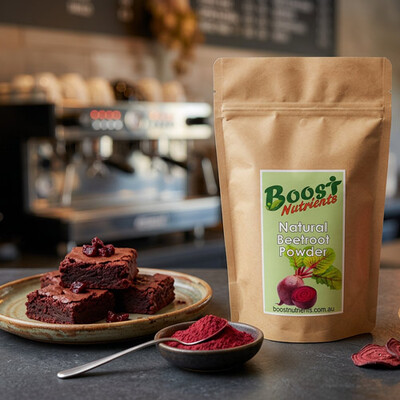
The natural pairing is dark chocolate. A chocolate and beetroot brownie is the most obvious application: the deep crimson running through a dark, fudgy brownie looks striking on a counter and needs no garnish. Red velvet muffins work on the same principle, with the colour doing the seasonal work. Beetroot and dark chocolate scones are a more unexpected combination but a rewarding one, particularly alongside a golden latte on a cold morning.
Beyond chocolate, beetroot powder works in spiced autumn loaves alongside cinnamon, nutmeg, and orange zest. A beetroot and orange loaf cake, lightly spiced, has a warm rose colour that reads as unmistakably seasonal and pairs well with a cream cheese or labneh topping. In savoury baking, the earthiness is an asset: beetroot powder added to a savoury scone or flatbread dough alongside goat's cheese and thyme produces something genuinely distinctive on a cafe counter.
For pancake or waffle batter, a half teaspoon per batch creates a warm blush that makes a standard breakfast stack feel seasonal without altering the flavour noticeably.
Beetroot in Bowls
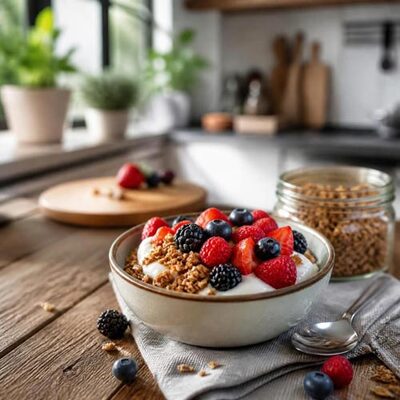
A small amount of beetroot powder dissolved in warm water and swirled across the surface of a finished açaí or yoghurt bowl is one of the simplest and most effective bowl finishes of the season. The deep crimson against a white or purple base is immediately photogenic, takes seconds, and adds a genuinely seasonal note to a format that can otherwise feel disconnected from the time of year.
Beetroot powder can also go directly into the bowl base. Blended into a smoothie bowl with frozen banana and berries, it deepens the colour to a rich burgundy and adds a subtle earthiness that pairs well with the sweetness of the fruit. Topped with granola, seeds, and seasonal autumn fruit, it becomes one of the most visually distinctive bowls on the menu.
Beetroot in Soups
Add a teaspoon of beetroot powder per portion to a roasted pumpkin, carrot, or tomato soup during the final blending stage. It deepens the colour of an already seasonal dish, integrates cleanly into the existing flavour profile without competing with it, and adds a clear nutritional note to a menu description without overstating it.
Carrot Powder: Warm Amber for Drinks and Baking
Carrot powder is gentler in flavour than beetroot: naturally sweet, with a mild earthiness that makes it one of the most versatile powders across both sweet and savoury applications. The colour is warm amber-orange, unmistakably autumnal, and it works in lattes, muffins, smoothie bowls, and soups with very little adjustment to existing recipes.
Carrot and Ginger Latte
A warming, amber autumn latte. The ginger and cinnamon give it a spice profile that feels seasonal without being aggressive.
Ingredients (1 × 300ml serve)
- 5 tsp Boost Nutrients Carrot Powder
- ½ tsp ground ginger
- ¼ tsp ground cinnamon
- Pinch of turmeric
- 1 tsp maple syrup or honey
- 20ml hot water
- 250ml oat milk
Method: Whisk carrot powder, spices, and sweetener with hot water into a smooth paste. Steam oat milk to 65°C and pour over the paste. Dust lightly with cinnamon to finish. Serve in a ceramic mug.
Suggested menu description: carrot and ginger latte, warming, naturally sweet, and caffeine-free.
Carrot in Autumn Baking
Carrot powder pairs naturally with the spice profiles that define autumn baking: cinnamon, nutmeg, cardamom, and ginger. One to two teaspoons per batch added alongside fresh grated carrot intensifies both colour and flavour in carrot cake and carrot loaf, pushing the orange deeper without any other change to the recipe. In pumpkin and carrot muffins, it deepens the warm colour in the same way. A carrot and cardamom loaf, lightly sweetened with maple syrup, is one of the more elegant expressions of this powder in a cafe baking context.
Carrot powder also works in savoury applications. Added to corn fritter or vegetable patty batter, it deepens the golden colour and adds a gentle natural sweetness. In a roasted carrot and lentil soup, it intensifies the existing flavour without any perceptible change to the dish.
Carrot in Smoothie Bowls
Blended into a mango or pineapple smoothie base, carrot powder creates a vibrant orange bowl that transitions naturally from the lighter summer formats into something with more warmth and body. The colour anchors the bowl in the season, while tropical fruit toppings keep it fresh.
Greens Powder: Kale, Spinach, and Broccoli
The term "greens powder" on a cafe menu often conjures something thick and strongly flavoured, built on spirulina or wheatgrass. The individual vegetable powders in the Opera Foods range are a different proposition. Boost Nutrients Kale Powder, Boost Nutrients Spinach Powder, and Boost Nutrients Broccoli Powder are each derived from a single Australian-grown vegetable, and each one behaves differently in drinks, bowls, and baking.
Kale has the strongest flavour of the three: grassy and gently bitter, noticeable at higher quantities but easily balanced with fruit or sweetener at the amounts used in most cafe applications. Spinach is milder, with a softer green that works well in bowls, overnight oats, and baking, where a subtle colour is more appropriate than a vivid one. Broccoli powder has a gentle, slightly savoury quality that suits it to baking and savoury applications rather than drinks.
Autumn Green Smoothie Bowl
Ingredients (1 × 350ml serve)
- 1 tsp kale powder
- 1 frozen banana
- 1 tbsp chia seeds
- 120ml apple juice or coconut water
- 80ml Greek or coconut yoghurt
- A handful of frozen mango or pineapple
Method: Blend all ingredients until smooth. Pour into a bowl and top with granola, bee pollen, and seasonal autumn fruit: sliced figs, late-season berries, or thin apple.
Greens in Bowls and Drinks
Beyond the smoothie bowl base, kale powder works as a topping dust: half a teaspoon scattered across the surface of a finished bowl alongside bee pollen and chia seeds adds a deep green that creates a naturally seasonal colour palette with no additional styling. The combination of deep green, golden yellow, and white reads as considered rather than decorated.
Spinach powder blends more smoothly into lighter applications. Stirred into the liquid base of overnight oats before setting, it produces a soft, muted green that communicates something nutritious and seasonal without dominating the flavour. It also works in smoothies where kale's bitterness might be too assertive: a spinach and pear smoothie with a teaspoon of spinach powder has a clean, bright green with a gentle flavour that suits the early autumn customer who is not quite ready to let go of lighter formats.
Greens in Savoury Baking and Cooking
One teaspoon of kale or spinach powder per batch added to savoury scone or bread dough produces a gentle green tint that reads as naturally wholesome. It pairs well with sharp cheese, pumpkin seeds, or fresh herbs, and the colour signals something seasonal without requiring fresh greens in the dough. A kale and cheddar scone or a spinach and feta roll both carry the colour of the season cleanly on a cafe counter.
Broccoli powder works particularly well in frittata and egg muffin batter, adding colour and a mild vegetable note to a cafe staple. Stirred into a white sauce or béchamel, it deepens the green and adds vegetable content to a dish without altering the texture. In savoury pesto or herb sauce, a teaspoon of broccoli powder alongside fresh herbs deepens the green and adds nutritional density without competing with the core flavours.
All three powders integrate cleanly into soups. A leek and potato soup with spinach powder, a pea and broccoli soup with broccoli powder, or a mixed greens soup fortified with kale all benefit from the deeper colour and the straightforward ingredient story that a single vegetable powder provides.
Storing Vegetable Powders in a Commercial Kitchen
The Boost Nutrients powders do not contain anti-caking agents, which means moisture management matters. Store all powders in airtight containers away from direct light, heat, and steam. Once opened, reseal the bag immediately and store it in a cool, dry place or in the refrigerator. If a powder clumps, it is still perfectly usable: break it up by hand or in a blender before measuring.
Small variations in quantity make a visible difference to colour, so it is worth standardising measures. A dedicated spoon for each powder, stored with the container, keeps colour consistent across service. For lattes and warm drinks, half to one teaspoon per serve is the right starting point. For baking, one to two teaspoons per twelve-serve batch delivers clear seasonal colour.
Beetroot paste for lattes can be pre-mixed in small batches at the start of service and portioned from there, which keeps preparation time negligible across a morning service. The same approach works for carrot paste in the carrot and ginger latte.
Where to Start
Beetroot is the natural entry point. The colour impact is immediate, the beetroot latte requires no new equipment, and it gives the cafe something to photograph and put on the specials board with minimal risk. Carrot into baking is the logical second step: adding carrot powder to existing autumn baking introduces the category to customers in a familiar context before it appears as a standalone drink. The greens powders follow naturally once the approach is established, as a topping dust on existing bowls, a base for a named seasonal green bowl, or an addition to the savoury baking that most cafes are already producing through autumn.
Browse the full Opera Foods vegetable powder range to find the right starting point for your autumn menu.