


Fibre New Protein: Why 2026's Breakfast Trend is About Gut Health
Author: Admin Date Posted:5 January 2026

Fibre-forward thinking Discover why fibre is 2026's biggest breakfast trend. Learn the science and the benefits that make fibre your competitive advantage.
Your health-conscious customers are already talking about fibre. For three years, you've built menus around protein, and rightfully so. But 2026 is different. Searches for 'fibre snacks' have exploded 2,578% year-on-year, #Fibremaxxing is trending with 160 million TikTok views, and Holland & Barrett just launched a dedicated High Fibre range. Nutrition experts from Tim Spector to Dr Federica Amati are openly declaring fibre the breakfast trend to watch.
The real question isn't whether fibre matters. It's whether your café will lead this shift or follow it.
The Nutrition Shift: From Protein Peak to Fibre Focus
You've mastered protein positioning. Your customers understand grams of protein per serve, they ask for high-protein options, and you've built menus around this standard. But protein isn't going anywhere. What's shifting is the conversation around what comes alongside it.
Three forces are aligning simultaneously. Firstly, GLP-1 weight loss drugs are reshaping breakfast priorities. These medications reduce stomach capacity, so your customers need nutrient-dense, smaller-portion breakfasts that deliver genuine satiety. Fibre stretches the stomach and triggers fullness signals, creating real satisfaction with fewer calories.
Secondly, gut health has evolved from fringe concern to mainstream priority. Your customers' beneficial bacteria require fibre to thrive. As customers understand this connection, they actively seek fibre-rich foods. Holland & Barrett reported searches for fibre increasing 52% since 2024, and general fibre snack searches are up nearly 2,600%.
Lastly, preventive nutrition now dominates health conversations. Your customers want breakfast that prevents disease tomorrow, not just tastes good today. High-fibre diets reduce the risk of cardiovascular disease, type 2 diabetes, obesity and metabolic syndrome. These are significant disease prevention tools your customers increasingly understand.
For your café, positioning fibre-forward breakfasts now gives you a genuine competitive advantage over operators still chasing protein.
Why Breakfast is the Easiest Entry Point for Fibre
Most Australians aren't eating enough fibre. The recommended daily intake is 30 grams, but adults consume approximately 18 grams. That gap is easily closed through a single breakfast.
Breakfast is your entire day's metabolic reset. A balanced breakfast determines energy levels, hunger signals, focus and alertness for hours. Within the first few hours, a refined-carb breakfast causes an energy crash, while a fibre-rich breakfast maintains steady alertness. Your customers feel this difference immediately.
Tim Spector, director of ZOE Nutrition Science, notes: "Your breakfast sets the tone for your entire day's energy and appetite." His research shows that skipping breakfast or eating breakfasts with a high glycaemic load creates metabolic disruption with spikes, crashes and persistent hunger. A balanced breakfast with fibre and protein stabilises blood sugar and reduces daily hunger without restriction.
Sarah Berry, co-director of ZOE, confirms customers feel benefits within hours: "People report more alertness, better focus, sustained energy. The effect isn't subtle." This is crucial for your café because sustained energy is tangible and repeatable. Customers experience better energy and will return for it consistently. That's genuine loyalty.
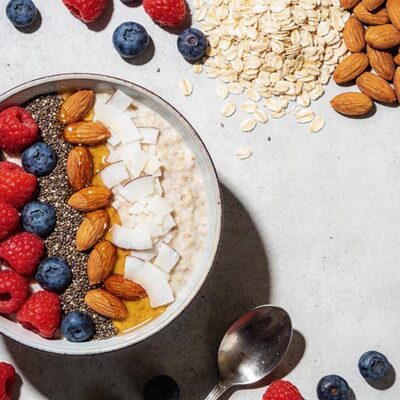
The practical numbers: overnight oats with chia and berries deliver 12 to 15g fibre, smoothie bowls provide 15 to 16g, wholemeal toast with nut butter delivers approximately 8g. A single breakfast closes the entire daily fibre gap for most customers. You're delivering 40% of their daily nutritional needs in one transaction.
Read our in-depth guide to what makes a balanced breakfast.
Soluble vs Insoluble: Understanding Fibre
Most café operators treat fibre as one ingredient. Understanding the two main types allows you to design breakfasts with specific benefits.
Soluble fibre dissolves in water, forms a gel in the gut, and slows digestion and stomach emptying. It creates powerful satiety signals to the brain. Soluble fibre feeds beneficial gut bacteria (these bacteria cannot digest anything except fibre). This prebiotic effect is foundational to gut health.
Best breakfast sources: oats, barley, chia seeds, apples, bananas, beans.
Insoluble fibre doesn't dissolve. It adds bulk and moves quickly through the digestive system, promoting regular bowel movements.
Best breakfast sources: whole grain bread, wheat bran, berries, nuts, and seeds.
Most plant foods contain both types. By designing breakfasts that layer both, you deliver comprehensive benefits. Overnight oats (soluble) topped with berries (insoluble) and chia seeds (both) deliver the full spectrum. Train staff simply: "We've got satiety fibres that keep you full, and regularity fibres that support digestion. Together, they're gut health in a bowl."
The Science Behind Fibre: Clinical Evidence
Fibre benefits operate across timescales.
Hours: Energy, Alertness, Focus
A balanced, fibre-rich breakfast maintains stable glucose levels, preventing the spike-and-crash cycle of refined-carb breakfasts. Customers who eat your high-fibre breakfast report feeling more alert because their blood sugar is genuinely more stable. This immediate effect is your most powerful retention tool. Customers will return seeking the same experience.
Days: Appetite and Weight Management
Within days of consistently eating high-fibre breakfasts, customers notice reduced hunger throughout the day. This is biology, not willpower. Soluble fibre triggers satiety hormones and prevents afternoon overeating. This is particularly relevant for GLP-1 drug users who need smaller portions delivering maximum nutritional density and satiety. Fibre-rich breakfasts deliver satiety on fewer calories while supporting the drug's mechanism of action.
Higher-protein plus higher-fibre breakfasts reduce daily hunger more effectively than protein alone. For your café, customers will choose your breakfast consistently as part of weight management. That's loyalty driving repeat business.
Weeks: Gut Microbiome Transformation
The gut microbiome affects digestion, immunity, metabolism, mood and cognition. Its requirement is fibre. Research by Dr Megan Rossi shows simply adding 6 grams of extra fibre daily improves microbiota composition within weeks. Diversity matters: consuming fibre from many plants (oats, chia, berries, nuts, seeds) creates a more resilient microbiome than relying on one source.
Regular breakfast consumption supports healthy microbiota. "Breakfast here supports your gut health at the bacterial level" is a powerful narrative.
Months to Years: Disease Prevention
High-fibre diets reduce the risk of cardiovascular disease, type 2 diabetes, obesity, metabolic syndrome and non-alcoholic fatty liver disease. These represent material reductions in chronic disease risk. Fibre stabilises blood sugar, reduces insulin spikes and decreases systemic inflammation, preventing the metabolic dysfunction underlying these diseases. "This breakfast supports your long-term health and prevents the diseases most Australians worry about" resonates more deeply than trend-based messaging.
Granola as Fibre Delivery Vehicle
High-fibre breakfasts often taste healthy, which is polite code for "not delicious." Customers won't order consistently if taste doesn't deliver. Quality granola isn't just a topping—it's a fibre delivery vehicle that makes fibre breakfasts delicious, crunchy and satisfying.
Standard breakfast cereals are heavily processed, high in sugar, and lose crunch immediately when exposed to milk or yogurt. Premium granola features whole visible ingredients (rolled oats, almonds, seeds), maintains structural integrity in wet contexts and delivers genuine nutritional substance.
Opera Foods' Roasted Almond Crunch at 9.7% sugar exemplifies this. It delivers approximately 4 to 5 grams of fibre per 40-gram serve. When combined with other breakfast components, the granola layer boosts total breakfast fibre to 10 to 15 grams while maintaining exceptional crunch and taste.
This matters operationally and commercially. Pre-portioned, quality granola simplifies kitchen execution and eliminates inconsistent homemade batches. Commercially, customers taste the difference between premium and cheap alternatives. That quality perception justifies premium bowl pricing. When you position granola by name—"With Opera Foods Roasted Almond Crunch"—you communicate quality and transparency: "This granola provides 4g of our 14g fibre total, made from whole oats and almonds, not processed alternatives."
Who's Actually Seeking Fibre in 2026?
Weight-conscious customers, including GLP-1 drug users, understand fibre triggers fullness signals and want smaller portions delivering maximum satisfaction. Health longevity customers with a preventive health focus understand that fibre feeds beneficial bacteria and supports disease prevention. Energy and performance customers—athletes, busy professionals, students—seek consistent energy without crashes. Across all segments, the unifying message is benefit-focused. Don't lead with "high-fibre." Lead with the outcome: "sustained energy," "gut health," "digestive wellness." Your customers care about outcomes, not nutrients.
The Clear Opportunity
Understanding who's seeking fibre is the first step. The second is recognising what this means for your café's positioning. These customer segments aren't niche audiences, but growing mainstream demographics actively seeking fibre-forward breakfast options. They are willing to pay premium prices for genuine health benefits backed by science. They're returning consistently because they feel the results. This is the competitive opportunity 2026 presents. Cafés that recognise this shift and act on it will capture this growing demand before competitors catch up.
Why 2026 is Your Café's Fibre Moment
For three years, you've chased protein. That's logical. Protein is important, customers understand it, and "high-protein" is an easy claim. But the landscape is shifting. Your customers increasingly understand that protein without fibre is incomplete, that satiety without digestive health is short-sighted, and that energy without nutritional substance is unsustainable.
Cafés positioning fibre-forward breakfasts now, before competition saturates this space, will differentiate themselves, attract growing customer segments seeking gut health, and justify premium pricing through genuine nutritional transparency. The science is sound. The consumer momentum is real. The expert consensus is clear. The competitive opportunity is genuine.
Your move is simple: make fibre the hero of breakfast. Not as an afterthought to protein, but as the foundational element your customers feel, understand and return for consistently. The cafés that lead this shift will define breakfast culture in 2026. Will yours be among them?
Explore our range of healthy cereals, designed with your cafe in mind.